In this comprehensive guide, we’ll introduce you to the top 10 U.S. inbound inbound marketing agencies around for 2026, detail their unique strengths and services, pros and cons for each agency and provide insights on how to evaluate and choose the perfect inbound marketing agency for your needs.
An inbound marketing agency helps companies attract, engage, and convert ideal customers through value-driven content, SEO, email nurturing, and marketing automation rather than cold outreach or interruptive advertising. For teams evaluating this model's financial case, the benefits of inbound marketing guide covers ROI data across B2B verticals. In 2026, this approach has become essential for companies seeking predictable pipeline growth, especially as buyers increasingly prefer to self-educate before speaking with sales representatives.
The shift toward buyer-led research is dramatic. B2B buyers now spend only 17% of their buying time in direct contact with sellers, preferring to navigate digital channels on their own terms. Understanding how to map content across the buyer's journey is how agencies capture buyers during that self-directed 83%. An inbound marketing agency builds the systems that meet these buyers where they are by creating content that answers their questions, nurturing relationships over time, and converting anonymous visitors into qualified opportunities your sales team actually wants to pursue.
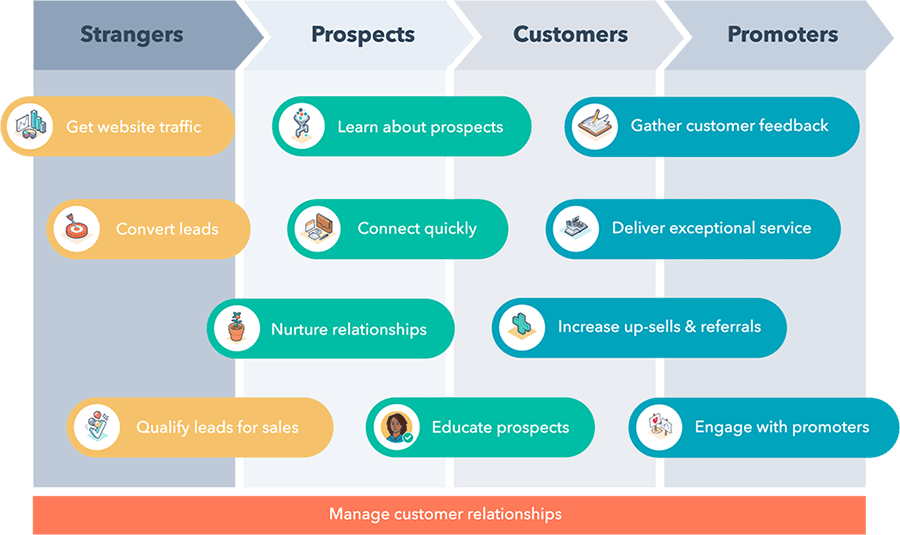
The core outcome of working with an inbound marketing agency is steady, scalable revenue growth built on trust, first-party data, and long-term customer relationships. For teams that want to see this in the context of the funnel vs flywheel explains why inbound produces compounding returns that outbound can't replicate. Rather than renting attention through paid ads alone, you’re building owned assets that compound over time.
What should you expect in concrete terms?
Here are the primary goals an inbound marketing agency works toward:
- Increasing qualified leads by attracting prospects who match your ideal customer profile through targeted content and search engine optimization
- Lowering customer acquisition cost through organic channels that become more efficient over time (after five months of consistent execution, average cost per lead drops by approximately 80%)
- Shortening sales cycles by educating prospects before they reach sales, so conversations start further down the funnel
- Improving customer lifetime value through post-sale engagement, education, and retention-focused content
- Building a sustainable pipeline that doesn’t disappear when you stop paying for ads
Results take time to materialize. Expect early qualitative wins within the first 3-4 months, such as better sales conversations and improved tracking. Quantitative gains like more demos, lower CAC, and higher conversion rates typically emerge within 6-18 months of consistent execution.
Inbound marketing agency vs. in-house team
Building an inbound marketing program requires diverse specialized skills: SEO expertise, content strategy and copywriting, web design and development, marketing automation knowledge, paid advertising management, analytics and data analysis, and strategic thinking about buyer journeys. Few companies have all these skills in-house.
An inbound agency brings cross-industry experience, proven methodologies, existing tools and technology platforms, and immediate execution capacity. An agency can begin executing within weeks, whereas hiring and onboarding qualified specialists takes 2-4 months per role. Agencies provide flexibility, if content needs surge, additional resources can be allocated without hiring.
In-house teams offer deep product knowledge, tighter feedback loops, continuity, and long-term brand stewardship. Internal marketing teams develop nuanced understanding of product capabilities, competitive positioning, and customer feedback that informs better messaging. They’re available for rapid iteration and direct collaboration.
Agency advantages:
- Immediate access to diverse expertise
- Proven processes and methodologies
- Flexibility to scale up or down
- Reduced hiring risk
In-house advantages:
- Deep product and industry knowledge
- Faster internal feedback loops
- Long-term brand consistency
- Often more cost-efficient at scale
By 2026, many companies use a hybrid model combining core internal resources with an external agency for scale and specialized expertise.
When outsourcing makes sense
Several scenarios make hiring a digital agency the better choice over building internally.
No existing marketing team: If you’re starting from zero, building a full internal team takes 6-12 months. An agency provides immediate capability while you hire strategically.
Limited internal bandwidth: Your marketing manager is stretched thin across too many priorities. An agency adds execution capacity for content, SEO, and campaigns while your internal team focuses on strategy and cross-functional work.
Aggressive growth targets: A Series A SaaS company needs to build pipeline in 3-6 months to hit board targets. An agency with relevant experience can move faster than a newly-hired team learning on the job.
Entering new markets: An established manufacturer wants to modernize demand generation or expand internationally. An agency with relevant experience brings playbooks that would take internal teams years to develop.
Discrete projects: Website redesigns, CRM migrations, or initial inbound playbook creation are time-bounded initiatives where agency expertise adds clear value without requiring permanent headcount.
Outsourcing reduces hiring risks and training costs while providing immediate access to senior specialists. You’re not gambling on whether a new hire will work out, you’re engaging a team with demonstrated track records.
Hybrid models and collaboration
The hybrid model is increasingly popular and often optimal. Companies retain strategic leadership (CMO, head of marketing, marketing manager) in-house and partner with agencies for execution-heavy work.
Example hybrid structure:
Internal team owns:
- Brand positioning and messaging strategy
- Product marketing and launch coordination
- Internal communications and sales enablement
- Customer marketing and retention programs
- Strategic planning and budget allocation
Agency owns:
- SEO strategy and execution
- Content production (blog posts, guides, case studies)
- Email campaign development and automation
- Paid advertising management
- CRM optimization and workflow maintenance
- Monthly analytics and reporting
The key to hybrid success is shared KPIs, both teams are accountable for the same pipeline and revenue outcomes. Joint planning meetings (monthly strategy sessions with internal leadership and agency leadership) ensure alignment. Clear ownership prevents gaps and duplication: no ambiguity about who owns each funnel stage and channel.
Hybrid models evolve over time. As companies mature, they may hire specialized internal talent to take on portions of agency work, transitioning from high-touch partnership to more transactional relationships. Conversely, companies may start with ambitious internal efforts, discover execution gaps, and bring in agency support to accelerate results.
Cost and scalability considerations
Comparing agency fees to in-house hiring requires looking at total cost: salary plus benefits (typically 25-30% of salary), tools and technology ($5,000-$15,000 annually), training and professional development, and management overhead.
An in-house team of 3-4 people typically costs $250,000-$400,000 annually in salary and benefits alone, plus tools. An $18,000/month agency retainer ($216,000 annually) plus internal costs of a single marketing leader ($120,000) totals $336,000 for hybrid approach but potentially delivers more capability and flexibility.
Agencies make it easier to scale efforts up or down. Need to double content production for a product launch? Add budget temporarily. Need to pause paid advertising during a slow quarter? Reduce scope without layoffs. This flexibility is valuable during growth phases when scaling internal headcount may be premature but capability gaps are urgent.
Think in terms of cost per outcome rather than just hourly rates or headcount. If your target cost per MQL is $200 and the agency consistently delivers at that cost, the retainer makes sense regardless of how many hours they spend. Focus on results.
Long-term planning matters too. As your company matures and inbound becomes predictable, transitioning more work in-house often becomes more efficient. A good agency will be upfront about when in-house hiring makes more sense, they’d rather be a reliable partner for appropriate work than cling to scope that would be better handled internally.
Top 10 Inbound Marketing Agencies for 2026
Navigating the ever-evolving world of the best inbound marketing companies and best inbound marketing agencies, can be daunting, especially with so many best inbound marketing companies and agencies and many best inbound marketing agencies and companies claiming to be the top choice.
To save you time and effort, we’ve carefully curated a list of the top 7 best inbound marketing companies and the best inbound marketing agencies, here for 2026, each with their own unique strengths and services that cater to various business needs.
These agencies have demonstrated outstanding results in areas such as:
-
Strategy & implementation
-
Integrations & migrations
-
Sales & marketing training
-
Revenue operations
-
CMS development
-
Lead generation & conversion
-
SEO & AI search optimization
- PPC & paid media optimization
Let’s dive into the details of each inbound marketing agency and explore how they can help your business grow.
Company Overview:
310 Creative is a B2B inbound marketing agency founded in 2003 and headquartered in Santa Monica, California. The agency specializes in helping companies generate predictable pipeline and revenue through inbound marketing strategies that attract, engage, and convert buyers throughout the customer journey. 310 Creative works with organizations across industries such as SaaS, professional services, manufacturing, and media that require scalable lead generation and marketing systems. As a Platinum HubSpot Partner, the firm focuses on implementing inbound frameworks that align marketing, sales, and customer relationship management to support measurable growth.
Methodology & Services:
310 Creative’s methodology is built around the inbound marketing framework of attract, engage, and delight. The agency develops inbound programs that combine content marketing, search engine optimization, conversion rate optimization, marketing automation, and CRM integration to guide prospects through the buying process. Core services include inbound marketing strategy, content creation, SEO, lead generation campaigns, marketing automation setup, email marketing, landing page development, website design, and sales enablement. These initiatives are designed to attract qualified visitors, convert them into leads, nurture them through automated workflows, and support sales teams with informed prospects ready for engagement.
Market Position & Brand Perception:
310 Creative positions itself as a strategic inbound marketing partner that helps B2B organizations build long term growth engines rather than relying solely on short term campaigns. Its deep experience with HubSpot and inbound methodology enables the agency to integrate marketing automation, CRM systems, and analytics into unified revenue programs. The agency emphasizes transparency, measurable performance, and alignment between marketing and sales teams, making it particularly well suited for companies seeking sustainable lead generation and customer acquisition through inbound strategies.
Pros & Cons
Pros:
-
Strong specialization in inbound marketing strategy and execution
-
Platinum HubSpot Partner with expertise in marketing automation and CRM integration
-
Integrated services including SEO, content marketing, website development, and lead nurturing
-
Focus on building long term pipeline growth through inbound methodology
Cons:
-
Inbound strategies typically require time to generate compounding results
-
Retainer based engagement model may require sustained marketing investment
-
Best suited for companies committed to content driven marketing and long term demand generation strategies rather than short term campaigns
2. Smart Bug Media
Company Overview:
SmartBug Media is a full service inbound marketing agency founded in 2007 that helps B2B and B2C organizations grow revenue through inbound marketing, digital strategy, and marketing automation. The agency operates as a distributed team across the United States and works with companies in industries such as SaaS, healthcare, manufacturing, finance, and professional services. SmartBug is recognized as an Elite HubSpot Partner, reflecting deep expertise in implementing inbound marketing systems that align marketing, sales, and customer experience around measurable growth.
Methodology & Services:
SmartBug’s methodology is built around the inbound marketing framework of attract, engage, and delight, which focuses on creating valuable content and experiences that guide buyers through the customer journey. The agency develops integrated inbound programs that include content marketing, search engine optimization, lead generation campaigns, marketing automation, email marketing, conversion rate optimization, and HubSpot implementation. Additional services include website design and development, sales enablement, CRM integration, and analytics reporting. These programs are designed to attract qualified visitors, convert them into leads, nurture them through automated workflows, and support sales teams with well informed prospects.
Market Position & Brand Perception:
SmartBug Media positions itself as a strategic inbound growth partner that helps organizations build sustainable demand generation engines rather than relying solely on short term marketing tactics. Its deep experience with HubSpot and inbound methodology allows the agency to design comprehensive programs that integrate marketing automation, CRM systems, and analytics to drive measurable pipeline and revenue growth. SmartBug is widely recognized within the HubSpot ecosystem and has received numerous industry awards, reinforcing its reputation as one of the leading inbound marketing agencies.
Pros & Cons
Pros:
-
Strong specialization in inbound marketing strategy and execution
-
Elite HubSpot Partner with advanced expertise in marketing automation and CRM integration
-
Comprehensive inbound services including SEO, content marketing, lead generation, and website development
-
Proven track record with companies across multiple industries
Cons:
-
Inbound marketing programs often require longer time horizons to produce measurable results
-
Retainer based engagement models may require sustained marketing investment
-
Broad service portfolio may be more comprehensive than needed for companies seeking limited marketing support
Kuno Creative is a distinguished inbound marketing agency renowned for its expertise in a wide array of digital marketing services. Specializing in CMS and web development, Kuno Creative excels in creating robust and user-friendly content management systems that enhance the digital presence of businesses.
Company Overview:
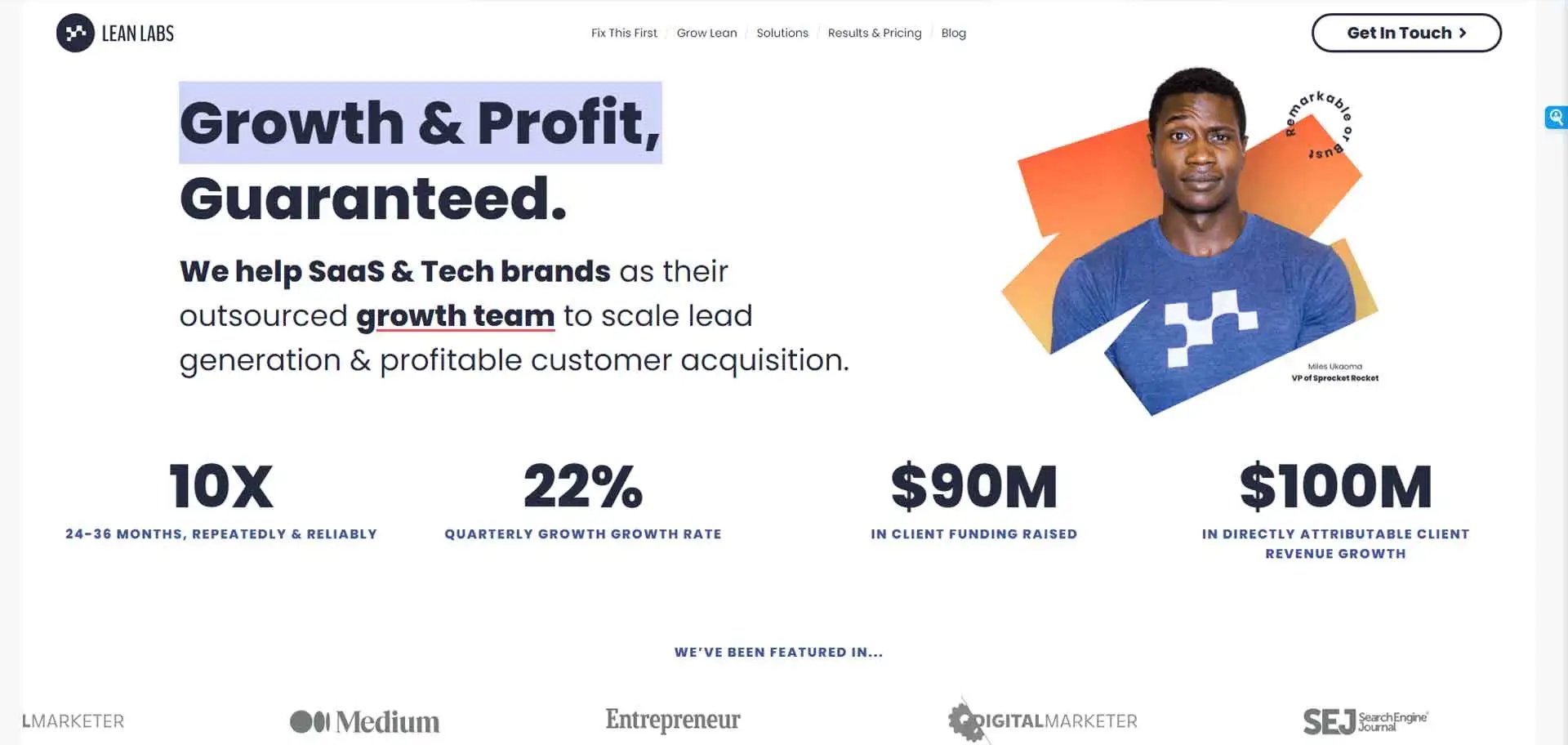
Lean Labs is a B2B inbound marketing and growth agency that helps companies generate pipeline and revenue through inbound driven demand generation strategies. Founded in 2012 and headquartered in Carlsbad, California, the agency works primarily with SaaS, technology, and B2B organizations that require structured marketing systems to attract and convert qualified buyers. Lean Labs positions itself as a growth partner focused on building scalable inbound marketing engines that align marketing and sales around measurable revenue outcomes.
Methodology & Services:
Lean Labs’ methodology is built on the inbound marketing framework of attracting, engaging, and converting prospects through valuable content and optimized digital experiences. The agency develops inbound marketing programs that combine content marketing, search engine optimization, website optimization, conversion rate optimization, marketing automation, and lead nurturing. Core services include inbound marketing strategy, website design and development, SEO, content creation, paid media campaigns, marketing automation setup, CRM integration, and sales enablement. These initiatives are designed to attract qualified visitors, convert them into leads through optimized landing pages and calls to action, and nurture them through automated workflows that support the sales process.
Market Position & Brand Perception:
Lean Labs positions itself as a specialized inbound growth partner that helps B2B organizations build predictable lead generation and customer acquisition systems. The agency emphasizes performance driven inbound marketing that integrates website design, content strategy, and marketing automation into unified growth programs. Lean Labs is particularly well suited for companies seeking to modernize their digital marketing infrastructure and create inbound funnels that consistently generate qualified opportunities and measurable pipeline growth.
Pros & Cons
Pros:
-
Strong focus on inbound marketing methodology and demand generation strategy
-
Integrated services including website development, SEO, content marketing, and marketing automation
-
Emphasis on conversion optimization and revenue focused inbound funnels
-
Experience working with SaaS and B2B companies with complex sales cycles
Cons:
-
Inbound marketing strategies often require time to produce compounding results
-
Retainer based engagement models may require sustained marketing investment
-
Best suited for companies committed to content driven inbound marketing rather than short term campaign execution
Company Overview:
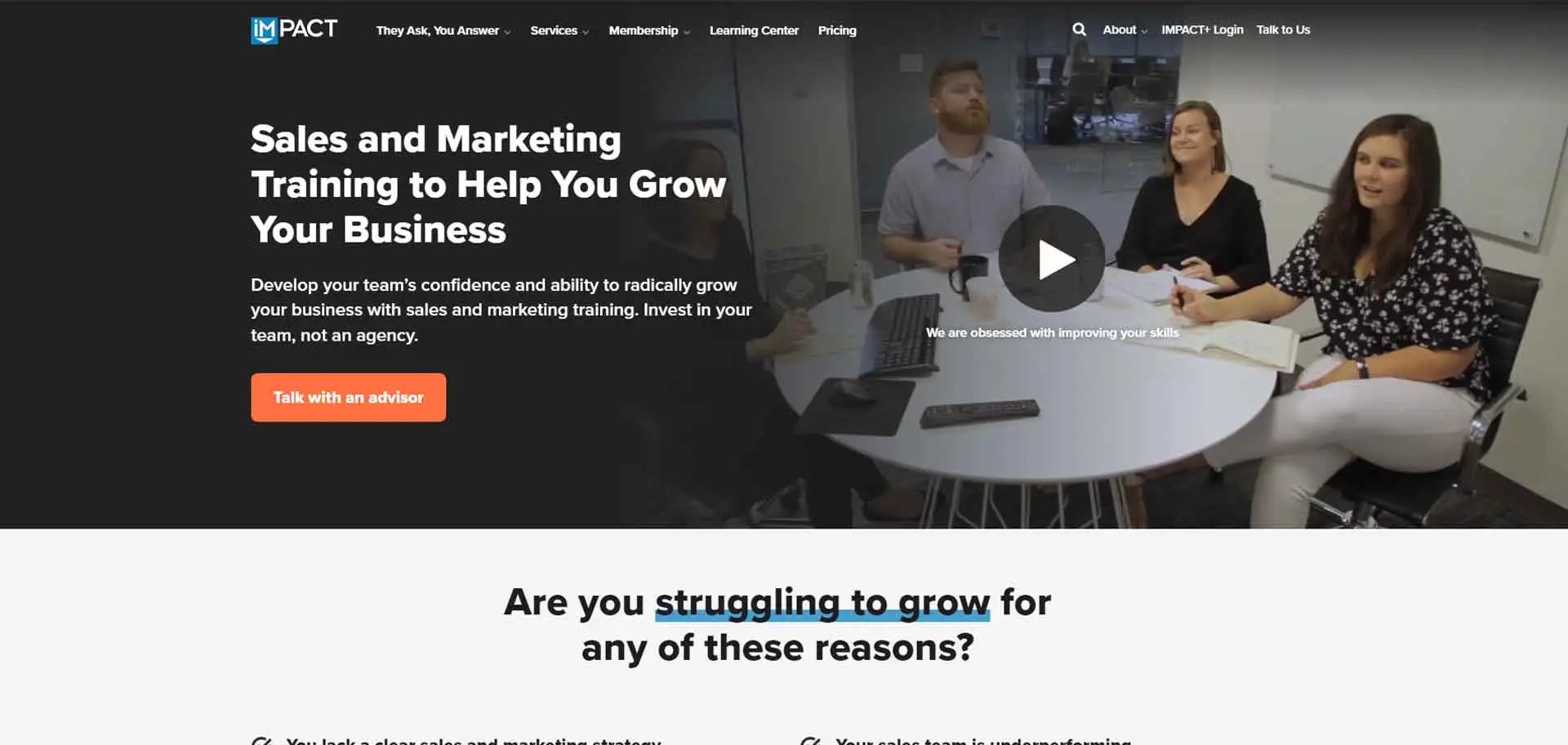
IMPACT is a digital marketing agency and consulting firm specializing in inbound marketing and revenue growth strategies. Founded in 2009 and headquartered in Connecticut, the company works with B2B and B2C organizations that want to build sustainable demand generation through inbound marketing. IMPACT is widely recognized within the HubSpot ecosystem and focuses on helping companies adopt inbound methodologies that align marketing, sales, and customer education to support long term growth and customer acquisition.
Methodology & Services:
IMPACT’s methodology is built around the inbound marketing framework that attracts, engages, and converts prospects through valuable content and digital experiences. The firm emphasizes the “They Ask, You Answer” approach, which encourages companies to create educational content that directly addresses buyer questions and concerns throughout the purchasing journey. Core services include inbound marketing strategy, content marketing, search engine optimization, website design and development, conversion rate optimization, marketing automation, HubSpot implementation, video marketing, and sales enablement. These initiatives are designed to generate qualified inbound traffic, convert visitors into leads, and nurture prospects into customers through educational content and automated engagement.
Market Position & Brand Perception:
IMPACT positions itself as a strategic inbound marketing partner and business transformation consultancy rather than only a campaign execution agency. The company is known for helping organizations build internal marketing capabilities while implementing inbound systems that drive predictable pipeline growth. Through consulting, training, and implementation services, IMPACT supports organizations that want to adopt inbound marketing as a long term business strategy. Engagements often focus on building sustainable content and marketing systems that produce ongoing traffic, leads, and revenue.
Pros & Cons
Pros:
-
Strong expertise in inbound marketing strategy and content driven demand generation
-
Recognized thought leadership around the inbound framework and educational marketing
-
Integrated services including website development, SEO, video marketing, and marketing automation
-
Focus on building sustainable inbound growth systems that support long term pipeline generation
Cons:
-
Inbound marketing programs often require longer timelines to produce measurable results
-
Consulting and training oriented approach may require internal teams to participate heavily in execution
-
Best suited for companies committed to long term inbound strategies rather than short term lead generation campaigns
Company Overview:
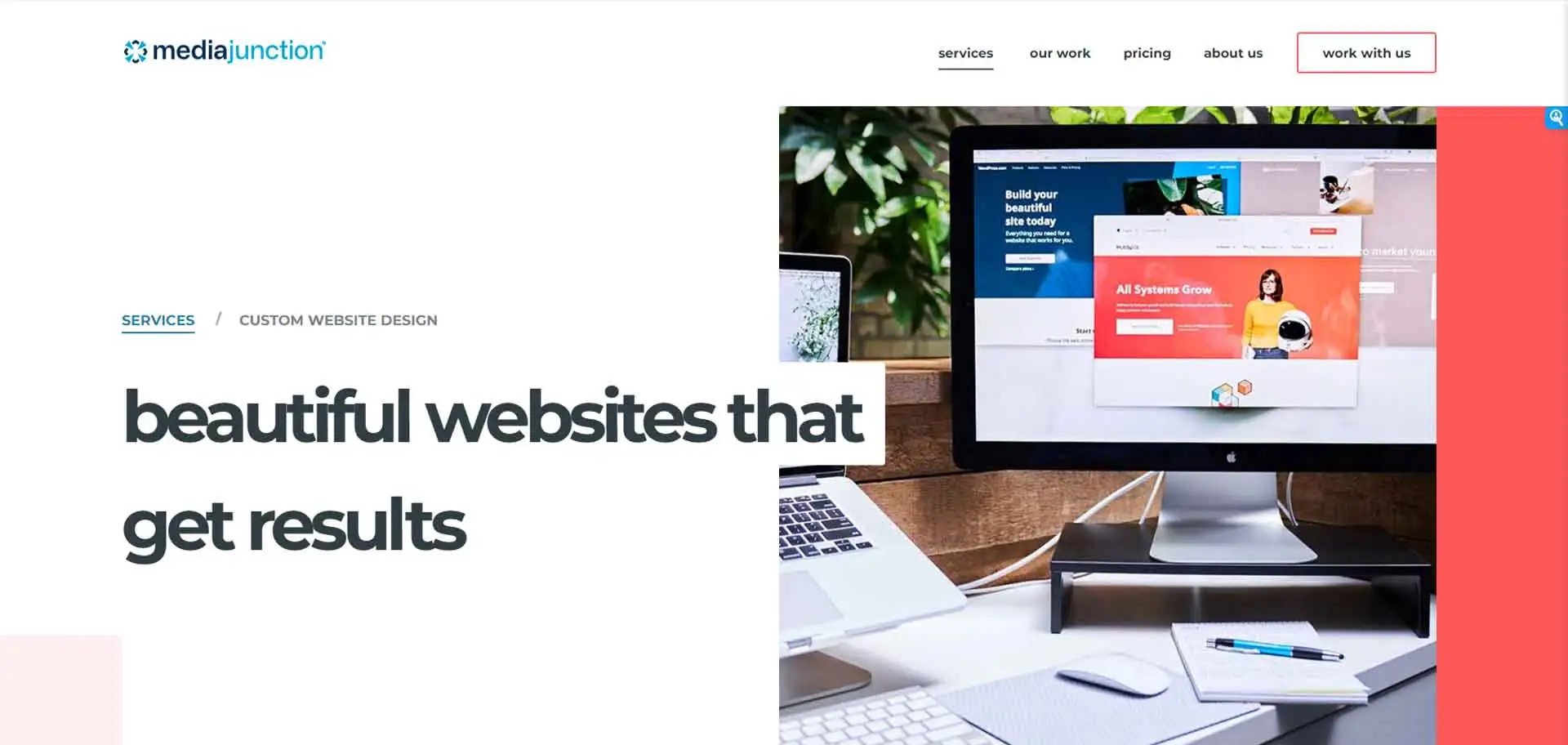
Media Junction is a B2B inbound marketing and web development agency that helps organizations generate pipeline and revenue through inbound driven digital marketing strategies. Founded in 1997 and headquartered in St. Paul, Minnesota, the agency works with companies across industries such as manufacturing, technology, healthcare, and professional services. Media Junction focuses on helping organizations attract and convert qualified prospects through content driven marketing and conversion optimized digital experiences. The agency is also a HubSpot partner, supporting clients in implementing inbound marketing systems and marketing automation platforms.
Methodology & Services:
Media Junction’s methodology follows the inbound marketing framework of attracting, engaging, and converting prospects through valuable content and digital experiences. The agency develops inbound programs that combine content marketing, search engine optimization, website design and development, conversion rate optimization, marketing automation, and CRM integration. Core services include inbound marketing strategy, SEO, content creation, website development, landing page optimization, email marketing, marketing automation implementation, and sales enablement support. These programs are designed to attract targeted visitors, convert them into leads through optimized conversion paths, and nurture prospects through automated workflows that support the sales process.
Market Position & Brand Perception:
Media Junction positions itself as a strategic inbound marketing and web development partner that helps organizations build long term demand generation systems rather than relying solely on short term campaigns. Its expertise in inbound methodology combined with strong web development capabilities allows the agency to create integrated digital experiences that support lead generation and conversion. Engagements typically focus on ongoing inbound marketing programs designed to drive sustainable traffic, leads, and pipeline growth through content driven strategies.
Pros & Cons
Pros:
-
Strong focus on inbound marketing methodology and content driven demand generation
-
Integrated services including website development, SEO, content marketing, and marketing automation
-
HubSpot expertise supporting CRM integration and lead nurturing programs
-
Long operational history with experience serving multiple B2B industries
Cons:
-
Inbound marketing strategies often require longer time horizons to deliver measurable results
-
Retainer based engagement models may require sustained marketing investment
-
Approach may be less suitable for companies seeking rapid short term lead generation through paid channels alone
Company Overview:
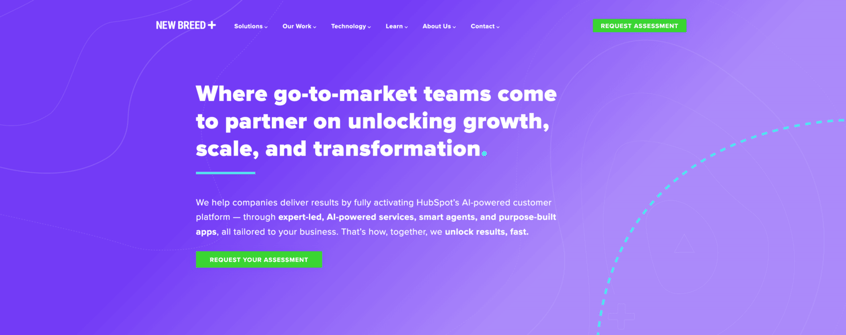
New Breed is a B2B revenue growth agency specializing in inbound marketing and revenue operations. Founded in 2002 and headquartered in Burlington, Vermont, the company works primarily with SaaS and technology organizations that want to build predictable pipeline and recurring revenue through inbound driven demand generation. New Breed is recognized as a HubSpot Elite Solutions Partner and focuses on helping companies align marketing, sales, and customer success around unified revenue goals through structured inbound strategies and CRM driven processes.
Methodology & Services:
New Breed’s methodology is built on the inbound marketing framework that attracts, engages, and converts prospects through valuable content, optimized digital experiences, and marketing automation. The agency develops inbound marketing programs that combine content strategy, search engine optimization, website optimization, marketing automation, CRM integration, lifecycle marketing, and conversion rate optimization. Core services include inbound marketing strategy, HubSpot implementation, content marketing, SEO, marketing automation, lead nurturing programs, sales enablement, and revenue operations consulting. These initiatives are designed to attract qualified visitors, convert them into leads through optimized conversion paths, and nurture them into customers through automated workflows that support the sales process.
Market Position & Brand Perception:
New Breed positions itself as a strategic inbound marketing and revenue operations partner that helps companies build scalable growth systems rather than relying on short term marketing campaigns. Its deep expertise in the HubSpot ecosystem allows the agency to integrate inbound marketing, CRM systems, and analytics into comprehensive revenue infrastructure. The firm is particularly well suited for SaaS and technology organizations seeking to implement inbound marketing while improving sales alignment and revenue operations maturity.
Pros & Cons
Pros:
-
Strong expertise in inbound marketing methodology and revenue operations integration
-
HubSpot Elite Solutions Partner with advanced CRM and marketing automation capabilities
-
Integrated services including SEO, content marketing, lifecycle marketing, and sales enablement
-
Experience supporting SaaS and technology companies with complex sales cycles
Cons:
Inbound marketing programs typically require longer time horizons to generate measurable pipeline results
Engagement models may involve significant strategic and operational investment
Best suited for organizations committed to building long term inbound marketing and revenue infrastructure rather than short term campaign execution
Company Overview:
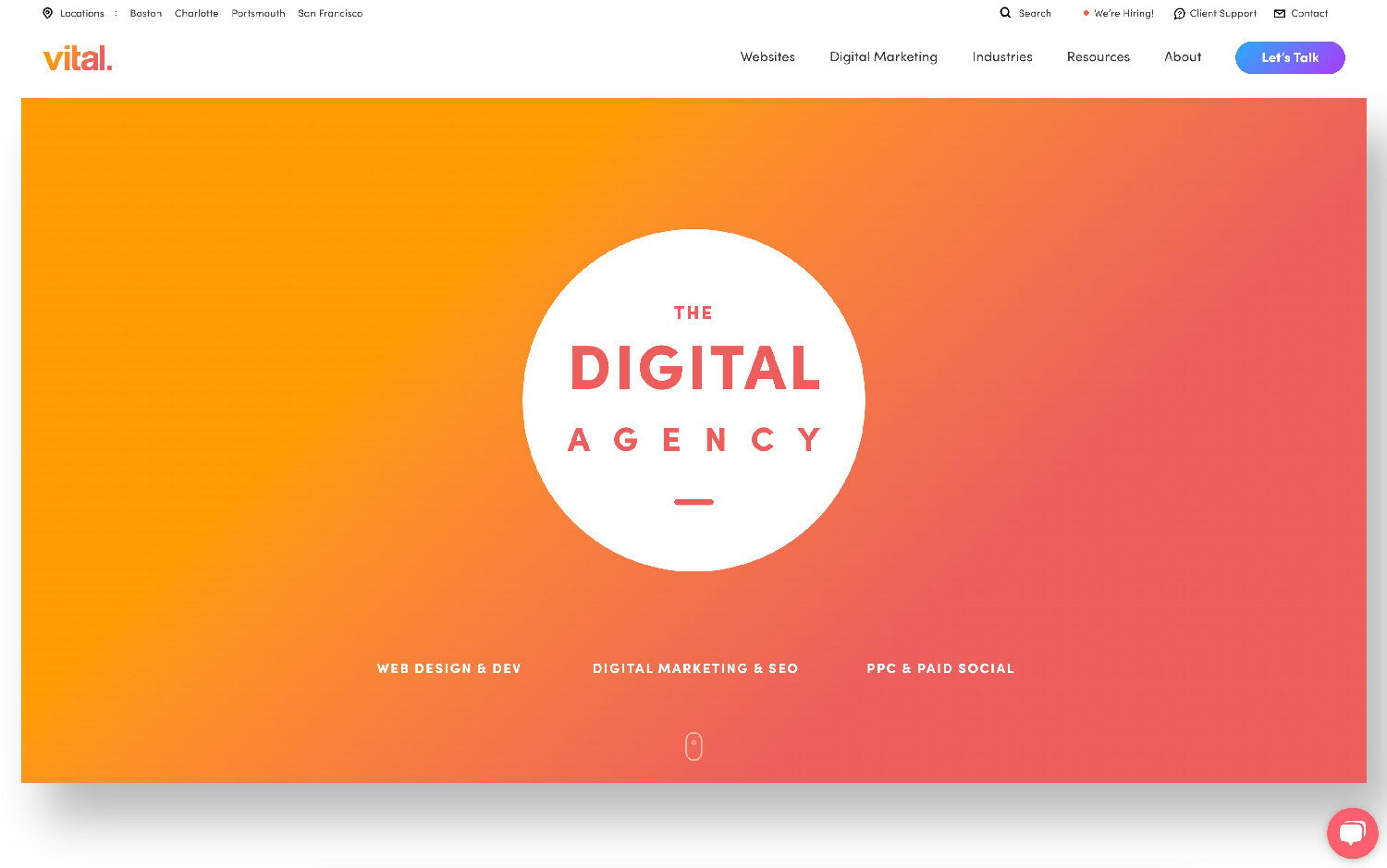
Vital Design is a B2B inbound marketing and digital strategy agency founded in 2001 and headquartered in Portsmouth, New Hampshire. The agency helps companies generate leads and revenue through inbound marketing strategies that attract, engage, and convert buyers across the customer journey. Vital Design works with organizations in industries such as manufacturing, healthcare, technology, and professional services that require structured digital marketing systems to support growth. As a HubSpot partner, the firm focuses on implementing inbound frameworks that align marketing, sales, and customer relationship management to improve lead generation and pipeline development.
Methodology & Services:
Vital Design’s methodology is built around the inbound marketing framework that attracts qualified visitors through valuable content and converts them into leads through optimized digital experiences. The agency develops inbound marketing programs that combine content marketing, search engine optimization, website design and development, conversion rate optimization, marketing automation, and CRM integration. Core services include inbound marketing strategy, SEO, blog and content creation, website development, landing page optimization, email marketing, marketing automation setup, and sales enablement. These initiatives are designed to attract targeted traffic, convert visitors into leads, and nurture prospects through automated engagement that supports the sales process.
Market Position & Brand Perception:
Vital Design positions itself as a strategic inbound marketing partner that helps organizations build sustainable demand generation systems rather than relying solely on short term marketing tactics. The agency emphasizes the integration of inbound methodology with website performance and user experience optimization to improve lead generation and conversion outcomes. Engagements are typically structured around ongoing inbound marketing programs designed to drive consistent traffic, qualified leads, and measurable pipeline growth.
Pros & Cons
Pros:
-
Strong specialization in inbound marketing strategy and execution
-
Integrated services including SEO, content marketing, website development, and marketing automation
-
HubSpot expertise supporting CRM integration and lead nurturing workflows
-
Long operational history with experience across multiple B2B industries
Cons:
-
Inbound marketing strategies typically require longer timelines to generate measurable results
-
Retainer based engagement models may require sustained marketing investment
-
Approach may be less suited for companies seeking rapid short term results through paid acquisition alone
Company Overview:
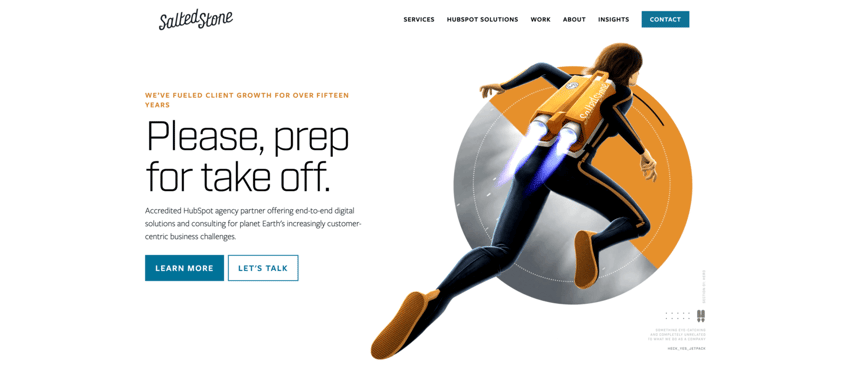
Salted Stone is a B2B inbound marketing and digital growth agency that helps companies generate pipeline and revenue through inbound marketing strategies and marketing automation. Founded in 2012 and headquartered in Monrovia, California, the agency works with organizations across industries such as SaaS, technology, healthcare, and financial services. Salted Stone is recognized as a HubSpot Elite Solutions Partner and focuses on helping businesses implement inbound marketing frameworks that align marketing, sales, and customer experience to support long term growth.
Methodology & Services:
Salted Stone’s methodology is based on the inbound marketing framework that attracts visitors through valuable content and digital experiences, converts them into leads, and nurtures them into customers through automated engagement. The agency develops inbound marketing programs that combine content marketing, search engine optimization, website design and development, conversion rate optimization, marketing automation, and CRM integration. Core services include inbound marketing strategy, HubSpot implementation, content creation, SEO, marketing automation setup, lifecycle marketing, website development, and analytics reporting. These programs are designed to attract qualified visitors, convert them into leads through optimized conversion paths, and nurture them through automated workflows that support the sales process.
Market Position & Brand Perception:
Salted Stone positions itself as a strategic inbound marketing and HubSpot implementation partner that helps organizations build scalable demand generation systems. The agency emphasizes integrating inbound marketing strategy with marketing automation, CRM platforms, and digital analytics to create measurable revenue growth. Its expertise within the HubSpot ecosystem and focus on inbound methodology make it particularly well suited for organizations seeking to build long term inbound marketing infrastructure and predictable lead generation.
Pros & Cons
Pros:
• Strong specialization in inbound marketing methodology and HubSpot implementation
• HubSpot Elite Solutions Partner with deep expertise in marketing automation and CRM integration
• Integrated services including SEO, content marketing, website development, and lifecycle marketing
• Focus on building long term inbound demand generation systems
Cons:
• Inbound marketing strategies typically require longer timelines to generate measurable results
• Retainer based engagement models may require sustained marketing investment
• Approach may be less suitable for companies seeking rapid short term lead generation through paid acquisition alone
Company Overview:
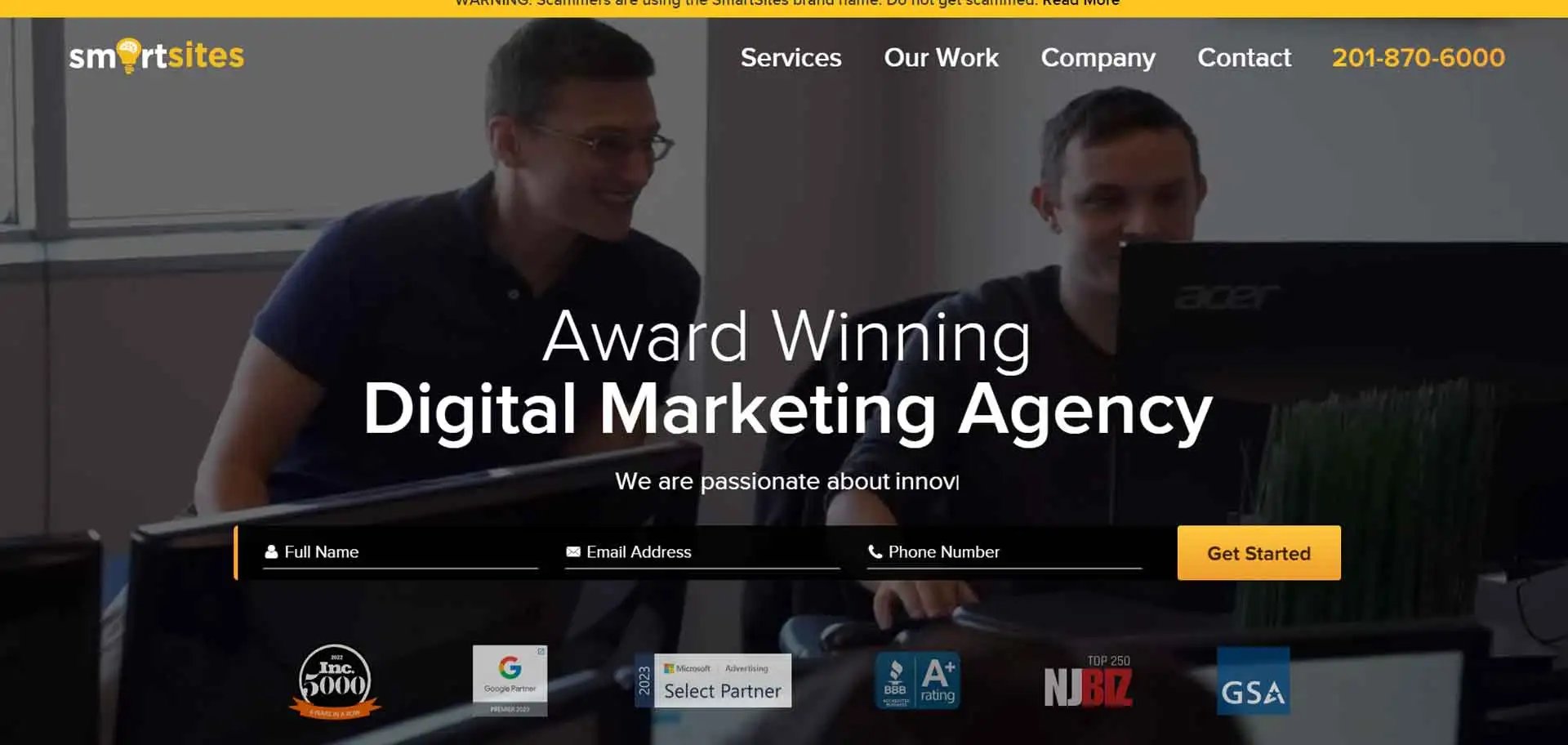
SmartSites is a digital marketing agency founded in 2011 and headquartered in Paramus, New Jersey that helps businesses generate leads and revenue through inbound driven digital marketing strategies. The agency works with companies across industries including SaaS, professional services, healthcare, and e commerce. SmartSites focuses on helping organizations attract qualified prospects and convert them into customers through search driven traffic, optimized websites, and targeted digital engagement. The agency has grown rapidly and is recognized across industry directories for its performance focused digital marketing services.
Methodology & Services:
SmartSites applies inbound marketing principles that focus on attracting prospects through search visibility and engaging them with optimized digital experiences that convert visitors into leads. The agency develops inbound programs that combine search engine optimization, pay per click advertising, website design and development, content marketing, email marketing, and conversion rate optimization. Core services include inbound marketing strategy, SEO, paid search management, landing page optimization, marketing automation support, and analytics reporting. These initiatives are designed to attract targeted traffic, convert visitors into leads through optimized conversion paths, and support ongoing lead nurturing and customer acquisition.
Market Position & Brand Perception:
SmartSites positions itself as a performance driven inbound marketing partner that helps organizations increase online visibility and convert digital traffic into measurable business results. Its expertise in SEO, website development, and digital advertising allows the agency to build inbound programs that generate consistent lead flow. The agency is particularly suited for companies seeking to improve their search presence and website performance as core components of an inbound marketing strategy. Engagements are typically structured around ongoing digital marketing programs focused on lead generation and conversion growth.
Pros & Cons
Pros:
-
Strong capabilities in SEO, website development, and inbound lead generation
-
Integrated services including content marketing, paid search, and conversion optimization
-
Emphasis on measurable lead generation and digital performance
-
Experience working with companies across multiple industries
Cons:
-
Inbound marketing strategy may rely heavily on search driven traffic compared to broader content driven inbound programs
-
Retainer based engagement models may require sustained marketing investment
-
Less specialized in HubSpot centric inbound marketing compared to agencies focused exclusively on inbound methodology

How much does an inbound marketing agency cost?
Pricing for inbound marketing agencies varies significantly based on company size, goals, and scope. Most agencies work on monthly retainers, though project-based engagements are common for initial work like website development, CRM migrations, or strategy creation.
Current typical ranges for 2026: small businesses (1-5 employees or under $5M revenue) generally invest $4,000-$12,000 per month. Mid-market companies (10-500 employees or $5M-$100M revenue) spend $15,000-$30,000+ monthly. Enterprise accounts with dedicated teams and custom solutions often exceed $30,000 monthly.
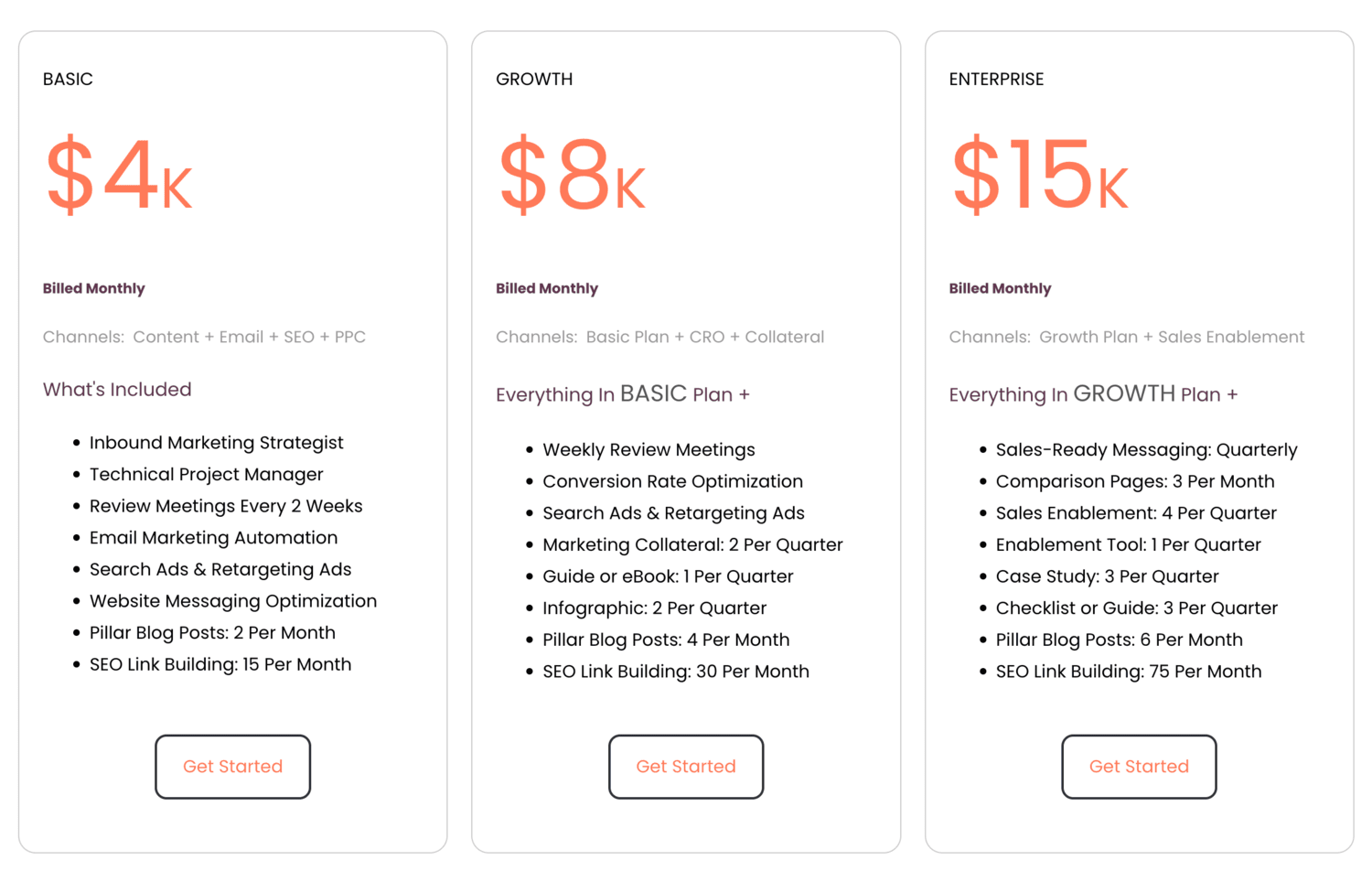
Several factors influence cost within these ranges:
- Content volume: More articles, guides, and gated assets per month increases cost
- Channel breadth: Managing paid search, LinkedIn Ads, and Meta Ads adds complexity
- Automation complexity: Sophisticated multi-branch nurturing workflows require more setup and maintenance
- CRM and integration work: Complex tech stacks need more implementation hours
- International SEO: Multi-language, multi-region strategies multiply effort
- Industry specialization: Regulated industries like healthcare and finance require compliance expertise
When comparing agencies and proposals, consider how the best inbound marketing companies are evaluated, look at experience, client testimonials, case studies, industry reputation, team expertise, and overall performance scoring.
The best inbound marketing agencies stand out by delivering comprehensive growth marketing strategies, offering high-level, results-driven services tailored to ambitious brands.
Top inbound marketing agencies are also recognized for their expertise, professionalism, and reputation for delivering measurable results.
Always request a detailed proposal listing hours allocated to different functions, specific deliverables with quantities and quality standards, timeline and milestones, expected KPIs and how success is measured, and what’s explicitly excluded (paid media spend is usually separate from agency fees). This level of transparency allows genuine comparison between agencies and helps you understand where marketing investments actually go.
Pricing models and typical retainers
Agencies structure pricing in several ways, each with distinct advantages depending on your situation.
Monthly retainers are most common. You commit to a fixed fee per month in exchange for defined deliverables. For example: 4 blog articles, 2 landing pages, 2 lead magnets, email campaigns, CRM optimization, on-page SEO, off-page SEO link building and monthly reporting. This model provides predictability for both parties and works well for ongoing relationships.
Project-based engagements charge a flat fee for specific deliverables. Examples include a $15,000 website redesign, a $8,000 CRM migration and setup, or a $25,000 90-day launch sprint designed to jumpstart your inbound program. Project-based work is common at the beginning of relationships or for discrete initiatives.
Hybrid approaches combine a base retainer covering core services with project-based add-ons. Some agencies include performance components (bonuses if pipeline goals are exceeded), though this is less common due to attribution complexity.
Concrete examples: A 6-month retainer focused on content + SEO might run $8,000-$12,000 monthly, delivering 6-8 blog posts, quarterly pillar content, lead magnets ongoing technical SEO, SEO link building, paid media management and monthly reporting. A full-funnel inbound overhaul including content, automation setup, paid media management, and CRM optimization might run $20,000-$35,000 monthly.
Serious agencies typically require minimum engagement lengths of 6-12 months, citing the reality that meaningful inbound results require consistent execution over this timeframe. Be skeptical of agencies promising dramatic results in 60-90 days, that’s rarely how inbound marketing works.
To compare proposals on an apples-to-apples basis, break down hourly rates implied by the retainer, specific deliverables and their frequency, expected outcomes and how they’ll be measured, and what happens if scope changes mid-engagement.
Budget planning and ROI expectations
How much should you allocate to inbound marketing efforts? As a general rule, marketing spend runs approximately 5-10% of annual revenue for growth-stage companies targeting over 30% annual growth, and 2-5% for mature companies focused on profitability. Within the marketing budget, allocating 30-50% to agency-managed inbound programs is reasonable for companies prioritizing pipeline growth.
Inbound is fundamentally a long-term investment. Meaningful SEO and content results typically take 4-9 months to materialize, with significant compounding growth accelerating from months 9-24. This isn’t like paid advertising where you can turn spend into leads immediately. You’re building assets that appreciate over time.
Expected ROI patterns follow a predictable arc. Early qualitative wins appear in months 1-4: better sales conversations because leads are more educated, improved tracking and attribution, clearer understanding of what messaging resonates. Quantitative gains emerge in months 4-12: more demo requests, lower customer acquisition cost as organic channels scale, higher conversion rates from better-qualified prospects.
Agencies should help model different scenarios before signing:
- Conservative scenario: 20% organic traffic growth in year one, 15% increase in organic leads, 3-month payback on agency fees
- Expected scenario: 40-60% organic traffic growth, 30-50% increase in qualified leads, 4-6 month payback
- Aggressive scenario: 80%+ traffic growth, 60%+ lead increase, 2-3 month payback (requires strong starting conditions)
Align spend with pipeline goals, average deal size, and sales capacity. If your average deal is $50,000 and your close rate is 20%, generating 10 additional SQLs monthly could mean $100,000 in new monthly revenue. That context makes a $10,000 monthly agency retainer much easier to justify.
What does an inbound marketing agency actually do?
An inbound agency functions as a long-term growth partner that plans, executes, and optimizes your entire inbound program. Unlike traditional marketing agencies focused on impressions and clicks, an inbound agency is accountable for delivering qualified leads, nurturing prospects through educational content, and optimizing conversion pathways based on data.
Core responsibilities span multiple disciplines:
- Market research and competitive analysis to identify opportunities and gaps
- Buyer persona development to ensure content resonates with decision-makers
- Content strategy and creation across blog posts, guides, case studies, and video
- Search engine optimization for sustainable organic traffic growth
- Multi-channel promotion through paid search, social media, email, and organic distribution
- Lead nurturing and scoring to qualify prospects before handing to sales
- Marketing automation implementation and workflow design
- Analytics and attribution modeling to connect marketing activity to revenue
- Continuous optimization based on performance data
Many full service inbound marketing agencies also support CRM implementation (particularly HubSpot or Salesforce), web development, and sales enablement initiatives. The goal is creating a complete inbound system that attracts potential customers, converts them into leads, and nurtures them toward purchase.
What a good inbound agency should own month to month:
- Publishing schedule and content calendar execution
- SEO monitoring and optimization
- Email campaign deployment and performance tracking
- Lead scoring and MQL handoff to sales
- Monthly analytics reporting with actionable insights
- Ongoing testing and conversion rate optimization
- CRM data hygiene and workflow maintenance
Strategy and planning
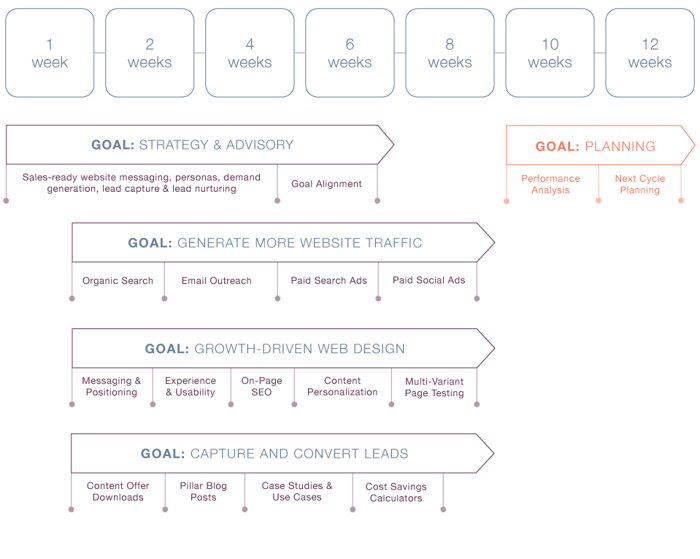
The engagement typically begins with a strategy phase lasting 2-4 weeks. During this period, the inbound agency conducts thorough market research, develops detailed buyer personas, performs competitive gap analysis, and defines measurable goals aligned with your revenue targets and sales capacity.
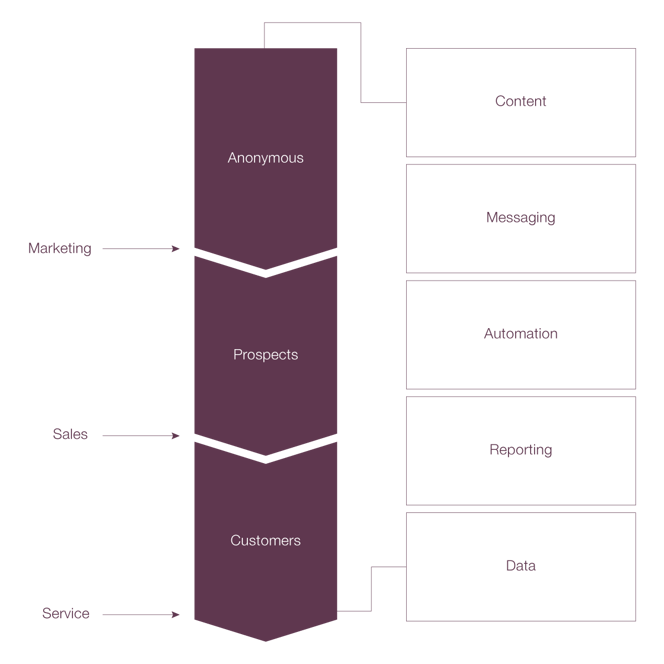
This isn’t just a formality. The strategy phase produces concrete deliverables that guide all subsequent work: keyword research documents identifying your highest-opportunity topics, content calendars mapped by quarter and buyer journey stage, channel-specific plans for SEO, paid search, social media, and email, plus detailed implementation roadmaps with milestones.
Goal-setting during this phase must be specific and measurable. Rather than vague objectives like “grow our digital presence,” strong agencies define targets such as “increase organic traffic by 60% in 12 months,” “double MQL volume while maintaining current close rate,” or “reduce sales cycle from 90 days to 60 days through better early-stage nurturing.”
Data-driven decision-making anchors the entire strategy. Agencies use tools like Google Analytics 4, Search Console, Ahrefs or SEMrush, and CRM reports to establish baselines and identify sales opportunities. They analyze which competitors rank for your target keywords, what content gaps exist in your market, and where your current funnel leaks prospects.
Critically, the strategy must align with your internal capacity. There’s no point generating 500 MQLs per month if your sales team can only handle 100 quality conversations. Agencies work with sales leadership to understand conversion rates, deal velocity, and capacity constraints, then calibrate inbound marketing strategy accordingly. Product launches, seasonal patterns, and business priorities all factor into the roadmap.
Content and SEO execution
Content and SEO form the backbone of any inbound program. Agencies plan and produce a range of assets tailored to different stages of the buyer journey and different content consumption preferences.
Typical content assets include SEO-optimized blog posts (generally 4-12 per month for active programs), long-form educational guides and pillar pages targeting high-intent keywords, case studies demonstrating real customer outcomes, product comparison and evaluation guides, landing pages optimized for conversion, webinar scripts, and video content. Each piece must serve a specific purpose in moving prospects closer to purchase.
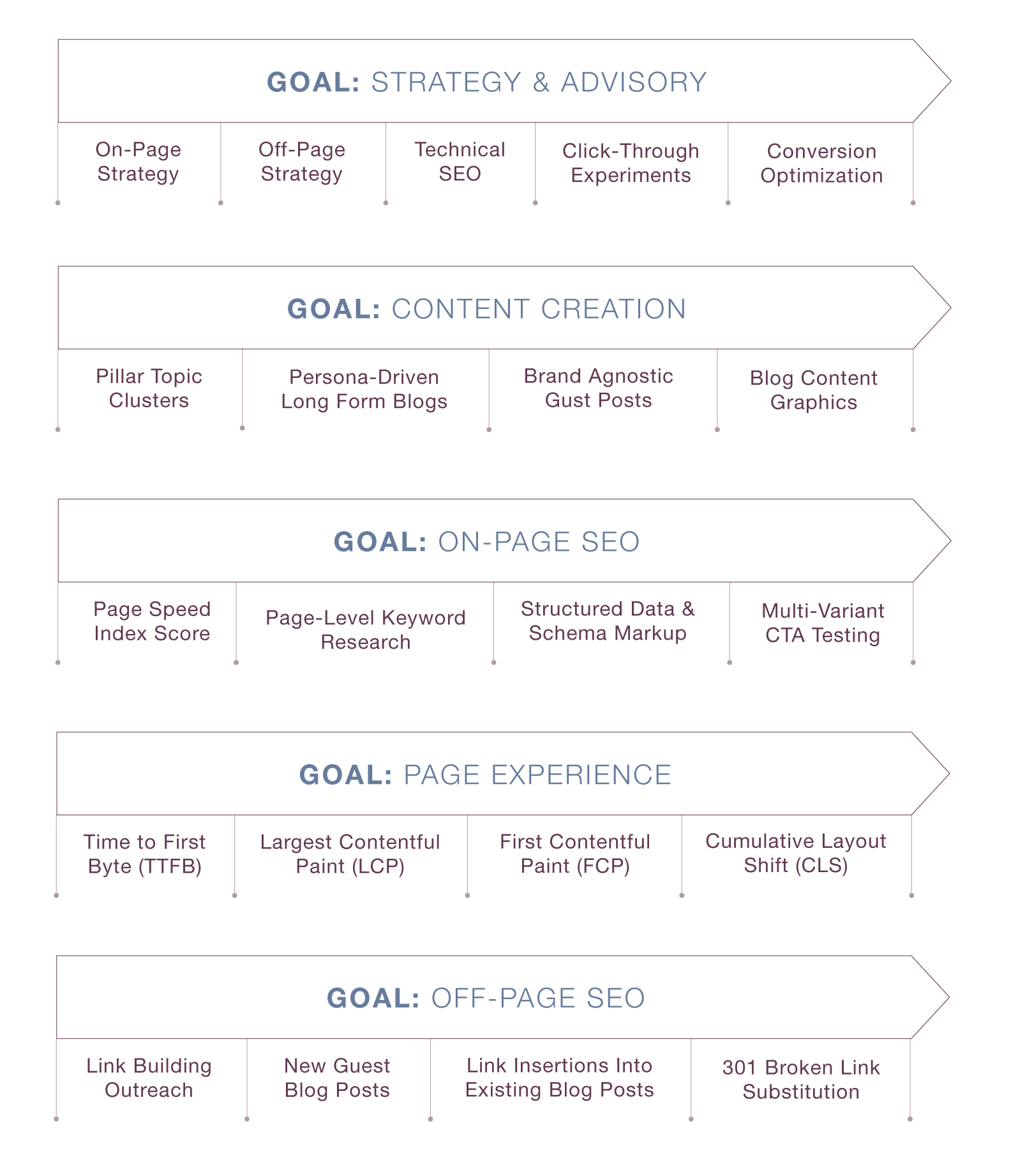
On-page and technical SEO work ensures this content actually gets found. Agencies handle keyword mapping to align content with search intent, implement proper internal linking architecture to distribute authority, apply schema markup to enable rich snippets and AI citations, optimize page speed and Core Web Vitals, and periodically refresh underperforming content to strengthen topical authority.
For example, a SaaS-focused inbound agency might publish 8 SEO-optimized blog posts monthly, produce one new gated asset (eBook, calculator, or template) each quarter, and develop quarterly pillar pages targeting high-intent keywords like “enterprise project management software comparison.”
Content must be original, expert-led, and tailored to search intent. Generic, surface-level articles don’t rank in 2026’s competitive landscape. Strong agencies conduct subject-matter interviews, reference authoritative sources, and develop proprietary frameworks or insights that competitors haven’t published. Every piece includes clear CTAs leading to gated assets, demos, or free trials, content without conversion goals is just noise.
Lead generation and nurturing
Lead generation transforms anonymous website visitors into known contacts with expressed interest. Agencies design lead magnets, valuable, specific resources like eBooks, calculators, templates, assessment tools, and webinars, offered in exchange for contact information.
The conversion pathway follows a defined architecture: relevant organic search result, paid ad, or social post drives the visitor to a purpose-built landing page with a clear value proposition and conversion form. Successful form submission triggers an automated welcome email. The new lead enters a nurturing sequence that delivers additional valuable content over 30-90 days. Progressive profiling gradually collects more behavioral and demographic data. Lead scoring models assess engagement and fit, determining which prospects are ready for sales outreach.

Marketing automation platforms like HubSpot, Marketo, or ActiveCampaign power these workflows. Segment-based email nurturing ensures different audience segments receive different sequences based on their behavior, industry, or inferred challenges. A CFO researching cost reduction receives different content than a marketing manager exploring demand generation options.
Lead scoring models assign points for explicit behaviors signaling buying intent: visiting the pricing page, attending a webinar, downloading a high-intent asset, or requesting a demo. Implicit factors include engagement frequency, seniority of the email domain, company size matching target profiles, and content consumption patterns.
Example 45-day nurturing sequence:
- Day 1: Welcome email introducing your company and delivering the promised resource
- Day 4: Educational email sharing a relevant blog article addressing a common challenge
- Day 10: Value-delivery email highlighting how your solution addresses specific pain points
- Day 18: Case study email demonstrating measurable customer success
- Day 28: Webinar invitation or video content offering deeper education
- Day 38: Comparison guide helping them evaluate options
- Day 45: Opportunity-creation email inviting further conversation or product demonstration
The goal is turning anonymous visitors into MQLs (Marketing Qualified Leads), then SQLs (Sales Qualified Leads) that your sales team actually wants to talk to, not just vanity leads that clog the pipeline.
Marketing automation and technology
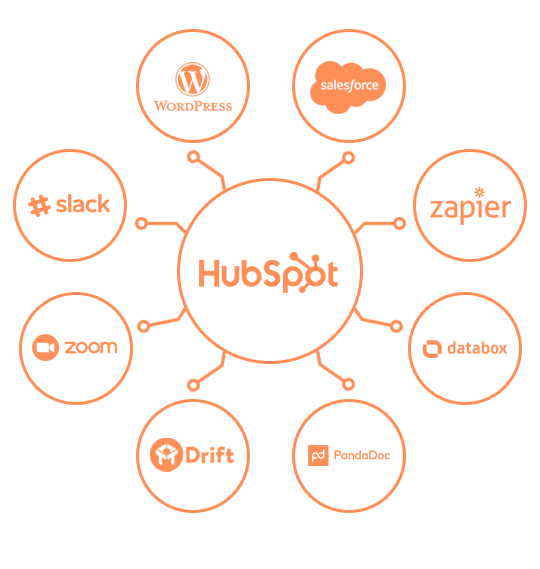
Inbound agencies guide clients in selecting, implementing, and integrating marketing technology stacks that enable closed-loop reporting and automated customer journey management. This goes beyond just picking software, it’s about building a system where data flows seamlessly between tools.
Common platforms include HubSpot (often the default for integrated CRM and marketing automation), Salesforce with Pardot or Marketing Cloud, Pipedrive for sales-focused teams, Klaviyo for ecommerce and email-driven brands, and ActiveCampaign for mid-market companies seeking strong automation. The selection depends on company size, existing tech investments, budget, and whether the priority is marketing automation, sales pipeline management, or customer experience optimization.
Proper integration connects website behavior tracking to the marketing automation platform, which enriches contact records and triggers workflows. The automation platform passes qualified leads to the CRM where sales teams manage conversations. Revenue data flows back to analytics tools for closed-loop attribution, allowing marketing to report not just “we generated 150 MQLs” but “those activities influenced $2.3M in pipeline and $680K in closed revenue.”
Marketing automation handles routine tasks that scale engagement without manual effort. Welcome series introduce new subscribers to your brand. Trial onboarding sequences guide users through product setup. Cart abandonment emails recover lost eCommerce sales. Win-back campaigns re-engage inactive subscribers. Lead re-engagement campaigns identify prospects showing renewed interest after dormancy.
The transformation typically happens in 2-3 months. A client might start with manual email lists, spreadsheets tracking leads, and no visibility into which marketing efforts actually drive revenue. By month three, they’re operating an integrated system where lead journeys are largely automated, CRM data connects to marketing activity, and the internal team can focus on strategy and creative work rather than manual data entry.
Inbound marketing agencies also ensure proper data hygiene, contact management, duplicate prevention, and GDPR/CCPA-compliant consent management. These aren’t glamorous tasks, but they’re essential for accurate reporting and legal compliance.
Core inbound marketing services agencies typically offer
Inbound marketing services are usually bundled into monthly retainers, though project-based engagements are common during initial phases like website redesigns or CRM migrations. The service mix varies based on client industry and marketing maturity.
The most frequently offered services include email marketing, CRM implementation or optimization, website design, content creation, and search engine optimization. Social media management, paid advertising, and sales alignment round out most offerings.
Must-have core services:
- Content strategy and creation (blog posts, guides, case studies, landing pages)
- SEO strategy and optimization (keyword research, technical SEO, link building)
- Email marketing and marketing automation (nurture sequences, newsletters, behavioral triggers)
- Analytics and reporting (traffic, leads, pipeline attribution, ROI tracking)
Nice-to-have or specialized services:
- Account-based marketing (ABM) for targeting high-value accounts
- Webinar and virtual event production
- Podcast strategy and production
- Conversion rate optimization (CRO) and landing page testing
- Full service creative agency work including brand identity development
- Video production and YouTube strategy
- Sales enablement content development
Service mixes are customized by industry vertical. B2B SaaS companies often need heavy emphasis on content marketing, product comparison pages, and trial conversion optimization. Healthcare and financial services require compliance-aware content strategies. Ecommerce brands prioritize email automation and paid media strategy. Manufacturing companies often need to modernize their digital presence while maintaining technical credibility.
Content marketing and SEO packages
A typical monthly content marketing and SEO package for an active inbound program includes specific deliverables designed to compound over time. Understanding what’s included helps you evaluate proposals on an apples-to-apples basis.
Standard packages typically include 4-12 SEO-optimized blog articles per month (the range depends on depth, topic difficulty, and research requirements). Quality matters more than quantity here, one comprehensive, expertly-researched article often outperforms three generic pieces.
Beyond regular blog content, expect one to two new gated assets per quarter (eBooks, templates, calculators, webinars), one quarterly pillar page or comprehensive guide targeting high-intent keywords, quarterly technical SEO audits addressing speed, Core Web Vitals, crawlability, and indexation issues, and monthly content refreshes optimizing existing pages to improve performance.
Every content asset should map to a defined buyer persona and funnel stage. A top-of-funnel blog post might target broad educational keywords and lead readers to a related eBook. A middle-funnel comparison guide helps prospects evaluate options and leads to a demo request. A bottom-funnel case study validates their choice and pushes toward purchase.
Quality and originality are non-negotiable. Agencies distinguish themselves by producing expert-led, well-researched content rather than commodity blog posts. This often involves conducting primary research, referencing authoritative sources, and developing proprietary frameworks that competitors haven’t published. Content should demonstrate genuine expertise and be structured for both human readers and search engines.
Measurable outcomes typically emerge on this timeline: months 1-3 establish baselines and publish initial content without major traffic changes. Months 4-6 bring early momentum as articles begin ranking. Months 6-9 show accelerating growth as topical authority compounds. Months 9-12 demonstrate significant year-over-year growth in organic traffic and organic-sourced leads.
Social media, email, and paid amplification
Beyond owned content, agencies repurpose and distribute your message across social media channels while maintaining a professional, educational tone. LinkedIn is critical for B2B audiences, agencies develop thought leadership content, share industry insights, and engage with target audience communities in ways that position your company as a trusted resource.
X (Twitter), Instagram, and industry-specific platforms like Reddit communities, Slack channels, and LinkedIn Groups are managed with strategies tailored to platform norms. The goal is consistent social media presence and authentic engagement, not vanity metrics like follower counts. Typical posting frequencies range from 3-5 LinkedIn posts weekly to daily engagement in relevant community discussions.
Email remains one of the highest-ROI digital channels. Beyond nurture sequences for new leads, agencies develop subscriber newsletters maintaining engagement with your existing audience, re-engagement campaigns winning back inactive subscribers, and behavior-triggered emails responding to specific actions. Email metrics tracked include open rates (15-25% for well-managed B2B segments), click-through rates (2-5%), and conversion rates (1-3% for lead-focused campaigns).
Paid amplification complements organic efforts through strategic budget deployment. Google Ads target high-intent keywords, LinkedIn Ads offer precise B2B audience targeting, and Meta Ads support awareness and remarketing. Critically, inbound-focused paid strategies use digital advertising to drive traffic to valuable content and gated assets rather than relying on interruptive promotional messaging. Typical paid budgets for mid-market companies range from $2,000-$10,000 per month, with ROI varying by industry and keyword competition.
Integration between paid channels and CRM segments enables direct attribution. Agencies can report how much pipeline and revenue was influenced by paid-driven leads versus organic discovery.
Analytics, reporting, and optimization
Analytics and reporting separate amateur marketing from professional inbound execution. Agencies track both platform metrics and business metrics, with emphasis on closed-loop attribution connecting marketing activity to revenue impact.
Platform-level metrics include:
- Organic traffic (sessions, users, page views by source and content topic)
- Form submissions and lead generation by source
- Email open rates, click-through rates, and reply rates
- Paid ad performance (cost per click, CTR, cost per lead)
- Social media engagement (impressions, clicks, shares)
Business metrics tied to revenue impact include:
- Number of MQLs generated monthly
- Conversion rate from MQL to opportunity or demo (typically 10-40%)
- Average sales cycle length
- Customer acquisition cost by channel
- Customer lifetime value
- Payback period (how long until CAC is recouped)
Advanced agencies model pipeline attribution across multiple touchpoints. First-touch attribution identifies which initial touchpoint drove the lead. Last-touch attribution credits the final touchpoint before conversion. Multi-touch attribution distributes credit across the entire journey. The most sophisticated agencies use incrementally testing or marketing mix modeling to understand true incremental impact.
Reporting cadence typically follows monthly and quarterly cycles. Monthly reports provide tactical feedback on what’s working and whether the program is on track. Quarterly business reviews dive deeper into strategic alignment: Are we on pace for revenue goals? Should we shift resources to different channels? Have buyer personas or competitive dynamics changed?
Optimization is continuous. Inbound marketing agencies test and iterate on landing page layouts, CTA copy and placement, email subject lines, content topics and formats, channel mix, and nurture sequence flows. Transparency in this process is non-negotiable. You should see what’s being tested, understand why, and review results regularly.
How to choose the right inbound marketing agency?
Choosing the right agency is as critical as the strategy itself. A poor fit can waste 12-18 months and significant budget while a strong partnership can transform your company’s growth trajectory.
Start by defining your objectives before comparing agencies. What specifically are you trying to achieve? More SQLs? Faster sales cycles? Entry into a new market? Lower CAC? Clear objectives help you evaluate which agency is best positioned to deliver.
Key criteria for evaluation:
- Industry experience: Have they worked with companies like yours?
- Track record: Can they demonstrate measurable results, not just impressive client logos?
- Communication style: Do they explain their thinking clearly and listen to your concerns?
- Transparency: Are they open about processes, challenges, and data?
- Revenue connection: Do they understand how marketing activity connects to pipeline and closed deals?
- The best inbound marketing agencies stand out by offering comprehensive, high-quality services, proven expertise, and a reputation for delivering results-driven strategies that consistently outperform others in the industry.
Review case studies carefully, looking for concrete metrics rather than vague testimonials. Check independent reviews on Clutch, G2, or Google Business Profile. Look at the agency’s own blog and social presence, do they practice what they preach?
Evaluating expertise and fit
Relevant sector expertise matters significantly. An agency experienced in B2B SaaS understands trial conversion optimization, product-led growth motions, and developer marketing. A healthcare specialist knows HIPAA considerations and the complexity of multi-stakeholder buying committees. Review portfolios and client lists to assess fit with your industry.
During discovery calls, request to meet the strategy team, not just sales. The people who would actually work on your account should be present. Ask about their methodology: “Walk me through how you’d approach keyword research for our space.” “How do you ensure content quality when scaling production?” “What does collaboration with our sales team look like?”
Questions to evaluate fit:
- How do you handle situations where recommendations conflict with what the client wants?
- Tell me about a campaign that underperformed, what did you learn?
- How do you stay current with SEO and content marketing changes?
- What does your content quality control process look like?
Cultural fit and shared values around collaboration matter for long-term relationships. If you prefer detailed weekly updates and they favor monthly check-ins, that mismatch will create friction.
Red flags to watch for: Agencies promising “page 1 rankings in 30 days” (unrealistic and potentially indicating black-hat tactics), refusing to discuss past campaign failures (suggests lack of learning culture), heavy focus on vanity metrics without connecting to revenue, or reluctance to align with your sales team.
Transparency, communication, and collaboration
Trustworthy inbound marketing companies are fully transparent about what they’re doing, why they’re doing it, and how success is measured. You shouldn’t need to guess what work is happening or what results it’s producing.
Ideal collaboration involves shared project management boards (Asana, Monday.com, or similar), open access to analytics dashboards, and joint planning sessions with both marketing and sales leaders. The agency should feel like an extension of your internal team, not a black box producing occasional reports.
Strong agencies proactively share experiments, early data, and learnings, not just polished success numbers. They’ll tell you when something isn’t working and recommend adjustments rather than hiding problems until they become crises.
Ask to see sample reports before signing. Understand what metrics they track, how frequently they report, and what level of detail you’ll receive. Clarify communication tools: Will you have a dedicated Slack channel? Weekly calls? Access to their project management system?
True partners invite feedback and push back constructively when tactics won’t support agreed goals. If you suggest a campaign idea that conflicts with your strategy, a good agency explains why rather than just executing to keep you happy. That kind of honest collaboration produces better results.
Questions to ask before you sign
Before committing to an inbound agency, dig into specifics during discovery calls. Detailed, thoughtful answers demonstrate real expertise and help set expectations on both sides.
Ask about their process: “What does month 1-3 look like working with you?” A strong agency will describe the strategy phase, deliverables you’ll receive, milestones they’ll hit, and when you should expect to see early results. Vague answers like “we’ll figure it out together” suggest lack of methodology.
Explore how they connect content to revenue: “How do you attribute marketing activity to pipeline and closed deals?” Agencies should describe their attribution approach, what CRM integration looks like, and how they report on business outcomes rather than just traffic metrics.
Clarify contract terms: What’s the minimum engagement length? What notice period is required for termination? What’s included in the retainer versus what costs extra? Who owns the content and accounts if the relationship ends? These details matter and should be documented before signing.
Request 1-2 relevant case studies with concrete metrics. A strong example might be: “We worked with a B2B SaaS company similar to yours. Over 12 months, we increased organic traffic by 120%, generated 47 qualified opportunities influenced by content, and contributed to $1.2M in pipeline. Their cost per MQL dropped from $340 to $180.”
Ask about team composition: Who will work on your account? What’s their experience level? How much of the work is done in-house versus outsourced? Understanding who actually does the work helps you assess quality expectations.
Common challenges with inbound marketing (and how agencies help)
Inbound marketing is powerful but not easy. Results take time, competition is fierce, and measurement can be complex. Understanding common challenges helps you set realistic expectations and evaluate how well agencies address them.
Major challenges companies face:
- Content saturation: Most verticals are flooded with generic content, making visibility difficult
- Long sales cycles: B2B purchases often take 3-12 months, requiring patient nurturing
- Sales-marketing misalignment: Marketing generates leads that sales ignores or considers low quality
- Proving ROI: Multi-touch journeys and dark social make attribution complex
Strong agencies mitigate these challenges through differentiated strategy, quality content, intentional alignment processes, and robust analytics. The best agencies have encountered these problems repeatedly and developed proven approaches.
Standing out in a saturated content landscape
By 2026, most industry verticals publish hundreds of articles weekly. Generic content struggles to achieve visibility or engagement. “5 Tips for Better Marketing” won’t rank or convert when dozens of competitors have published identical listicles.
Agencies differentiate through depth, not volume. They conduct in-depth subject-matter research, interview industry experts and customers, and identify angles competitors have overlooked. Competitor gap analysis reveals topics that are under-served or poorly addressed. Original research, surveys, data analysis, proprietary studies, creates content that generates links and citations naturally.
Formats that cut through noise:
- Data studies and original research reports
- Interactive tools (calculators, assessments, ROI models)
- Video series featuring genuine expertise
- Podcast interviews with industry leaders
- Case-study-driven content with specific metrics
Editorial quality matters more than ever. Strong point of view, clear writing, and consistent publishing cadence help brands build audience over time. Agencies also recommend pruning underperforming content and consolidating overlapping articles to strengthen topical authority rather than just publishing more.
Managing long B2B sales cycles
Long consideration phases, often 3-12 months for complex B2B solutions, require patient nurturing with consistent, valuable touchpoints. Buyers research extensively, evaluate multiple vendors, align internal stakeholders, and build business cases before purchasing.
Agencies design multi-step sequences delivering high-value content at strategic intervals. The goal is being persistently helpful and top-of-mind, not pushy. When the buying window opens, you want to be the obvious choice because you’ve been consistently valuable throughout their research process.
Example long-cycle nurture path:
- Month 1: Educational content addressing initial problem awareness (blog posts, guides)
- Month 2: Deeper exploration of solutions and approaches (webinars, comparison guides)
- Month 3: Validation and proof (case studies, ROI calculators, customer testimonials)
- Month 4-6: Periodic touchpoints maintaining relationship (newsletter, new research, industry updates)
- When buying signals appear: Direct outreach with personalized offers
Remarketing campaigns remind prospects of your brand while they evaluate alternatives. Mid-funnel content like case studies, ROI models, and comparison guides helps them build internal business cases. Agencies also help sales teams use content strategically in their outreach to accelerate deals, sending relevant case studies or guides based on specific prospect needs.
Aligning marketing with sales and customer success
Common misalignments plague many organizations. Marketing generates high volume of leads that sales perceives as low quality. Sales ignores MQLs because they don’t trust the qualification criteria. Customer feedback never reaches marketing to inform content strategy.
Agencies facilitate alignment by establishing clear SLAs (service level agreements) between teams.
These define:
- What constitutes an MQL versus an SQL
- How quickly sales must respond to qualified leads
- What feedback sales provides on lead quality
- How marketing will adjust based on sales input
Joint dashboards provide transparency. When both teams see the same pipeline metrics, conversations become more productive. Regular revenue meetings, often monthly pipeline reviews, bring marketing, sales, and sometimes customer success together to review performance and adjust strategy.
Example monthly review agenda:
- MQL volume and quality assessment
- Conversion rates at each funnel stage
- Win/loss analysis for recent deals
- Content performance and upcoming priorities
- Feedback from sales conversations
Alignment increases close rates, improves lead quality, and makes inbound efforts more profitable. Customer success teams can also feed content ideas and expansion opportunities back into inbound programs, creating a complete customer journey.
Measuring inbound marketing ROI accurately
Measuring inbound ROI is inherently complex. Prospects interact with 5-20+ brand touchpoints before converting. Dark social, sharing in private channels, Slack groups, word-of-mouth, can’t be tracked directly. Long buying cycles mean the content that influenced a deal may have been consumed six months ago.
Agencies address this through multiple approaches. They implement closed-loop CRM tracking connecting every marketing touchpoint to contact records. They use multiple attribution models: first-touch (which initial touchpoint drove the lead), last-touch (which touchpoint closest to conversion gets credit), and multi-touch (distributing credit across the journey). Different models tell different stories, and understanding all three provides fuller picture.
Key metrics for ROI tracking:
- Pipeline influenced by marketing activity
- Revenue attributed to specific campaigns or content
- Customer acquisition cost by channel
- Payback period (time to recoup CAC)
- Changes in win rate and deal velocity
- Organic traffic to lead conversion rate
Qualitative feedback supplements quantitative data. Ask new customers how they discovered you. Note which content pieces sales mentions most often. Track whether prospect conversations reference specific articles or guides.
Perfect measurement isn’t possible, but significantly better visibility is. Agencies typically refine tracking setups over the first 60-90 days, clean historical data, establish baselines, then optimize campaigns based on cleaner information. By month 6, most clients have dramatically improved visibility into what’s actually working.
Is an inbound marketing agency right for your business?
Inbound marketing delivers strongest results for companies with specific characteristics. If your offering requires explanation, your customers value trust, and your lifetime value justifies investment in relationship-building, inbound is likely a fit.
Companies that benefit most from inbound agencies:
- B2B technology and SaaS: Complex products requiring education, trial-to-paid conversion optimization, developer marketing
- Professional services: Consulting, legal, accounting, and advisory firms where expertise and trust drive decisions
- Healthcare and life sciences: Regulated industries requiring credibility and compliance-aware content
- Financial services: Insurance, wealth management, and fintech where trust is paramount
- Manufacturing and industrial: Technical products with long sales cycles and multiple stakeholders
- Education and training: Programs requiring significant consideration and comparison
Inbound works especially well when lifetime value is high and relationships matter, not just one-off transactions. If your average customer stays for years and purchases expand over time, investing in attracting the right customers through quality content makes economic sense.
Before engaging an agency, assess your current state:
- Positioning clarity: Do you know your differentiation and ideal customer profile?
- Content assets: What do you have already? What gaps exist?
- Analytics setup: Can you track visitors, leads, and revenue attribution today?
- Internal bandwidth: Who will collaborate with the agency on strategy and approvals?
- Sales capacity: Can your team handle increased qualified lead volume?
If you’re confident in your positioning, have some content foundation to build on, and have realistic expectations about timeline, an inbound marketing agency can accelerate your company’s growth significantly.
The next step is straightforward: map your current assets and gaps, gather baseline metrics on traffic, leads, and pipeline, define what success looks like in 12 months, and schedule discovery calls with 2-3 agencies that specialize in your industry. Those conversations will clarify fit, set expectations, and help you understand whether now is the right time to invest. Most inbound marketing agencies offer a free consultation as a no-obligation way to evaluate your needs and determine if there’s a good fit.
Inbound marketing isn’t a quick fix. It’s a sustainable approach to building meaningful connections with potential customers who become long-term advocates for your brand. When executed well, it transforms marketing from a cost center into a predictable revenue engine.
Benefits of Inbound Marketing
Inbound marketing delivers a host of advantages for businesses aiming to grow their digital presence and build lasting relationships with their audience. By focusing on creating valuable, relevant content, inbound marketing helps companies attract potential customers who are actively seeking solutions, rather than interrupting them with unsolicited messages. This approach not only increases brand awareness but also drives effective lead generation, as prospects are more likely to engage with brands that provide genuine value.
One of the key benefits of inbound marketing is its ability to foster meaningful connections with your target audience. By addressing their specific needs and challenges through educational content, businesses position themselves as trusted advisors and thought leaders in their industry. This trust is crucial for customer acquisition, as buyers are more likely to choose brands they feel understand their problems and can offer tailored solutions.
Additionally, inbound marketing services enable companies to reach a broad audience in a cost-effective manner. Instead of relying solely on traditional advertising, which can be expensive and less targeted, inbound marketing focuses on earning attention through organic channels. This not only reduces customer acquisition costs but also ensures that marketing investments continue to deliver value over time as content assets compound and attract new leads.
Ultimately, inbound marketing empowers businesses to build a sustainable pipeline of qualified leads, nurture those relationships, and convert them into loyal customers, all while strengthening their brand reputation and expanding their reach within their target market.
Web development and optimization
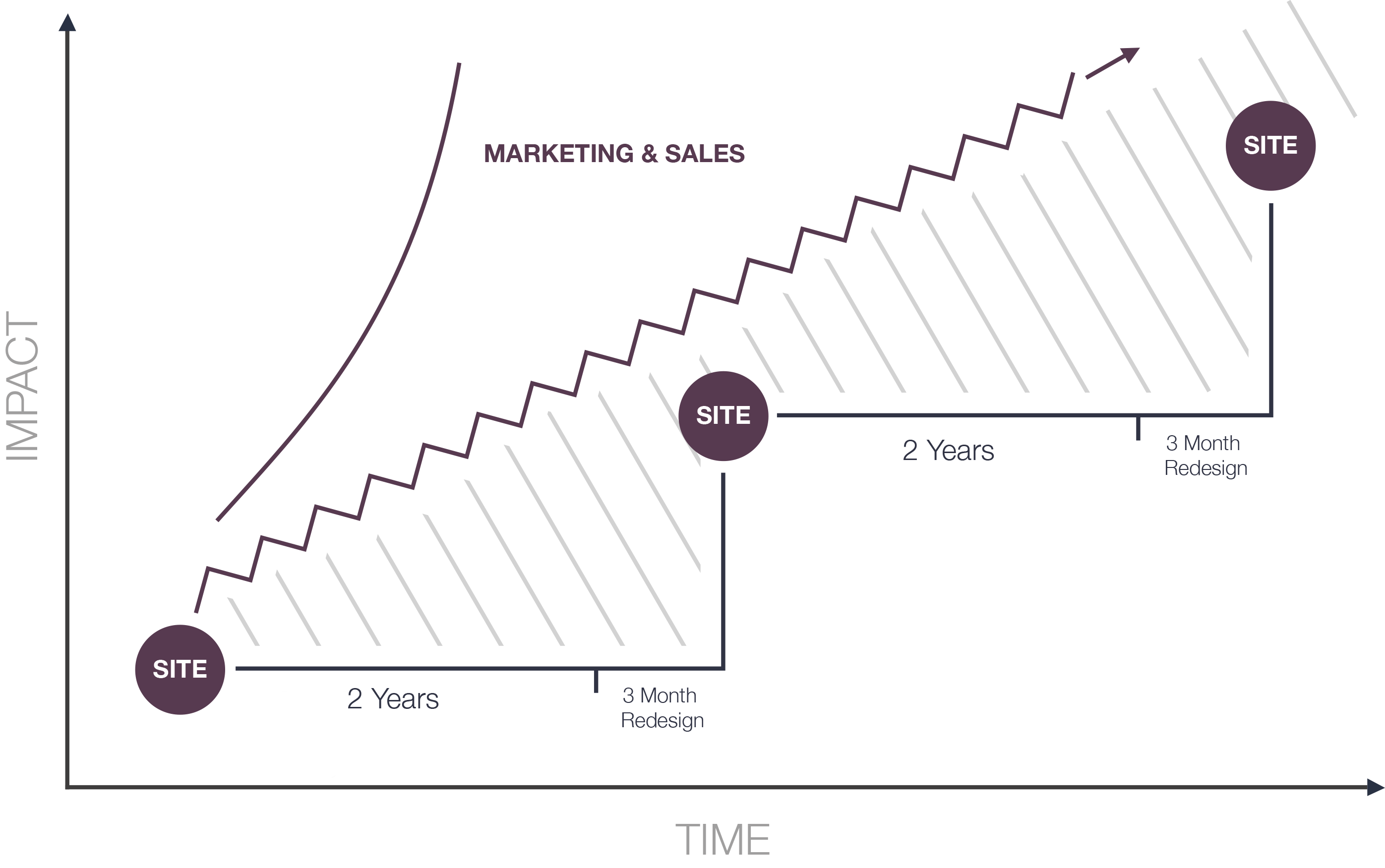
A high-performing website is the cornerstone of any successful inbound marketing strategy. Web development and optimization go far beyond aesthetics, they ensure your site is a powerful engine for attracting, engaging, and converting visitors. As the central hub for all marketing efforts, your website must be designed with both users and search engines in mind.
Effective web development focuses on creating a seamless user experience, with intuitive navigation, fast page load times, and mobile responsiveness. These elements are essential for keeping visitors engaged and reducing bounce rates, which in turn supports your inbound marketing goals. Optimization also involves crafting high-quality, relevant content that addresses the needs of your audience and encourages them to take action.
Search engine optimization (SEO) is a critical component of this process. By implementing on-page and technical SEO best practices, such as optimizing meta tags, improving site structure, and ensuring crawlability, you increase your website’s chances of ranking highly in search engine results pages (SERPs). This drives organic traffic and enhances your online visibility, making it easier for potential customers to find you when they search for solutions.
A well-optimized website not only supports your inbound marketing efforts but also serves as a reliable platform for ongoing content creation, lead capture, and customer engagement. Investing in web development and SEO ensures your digital presence remains competitive and continues to generate results as search engines and user expectations evolve.
Google Ads and paid search management
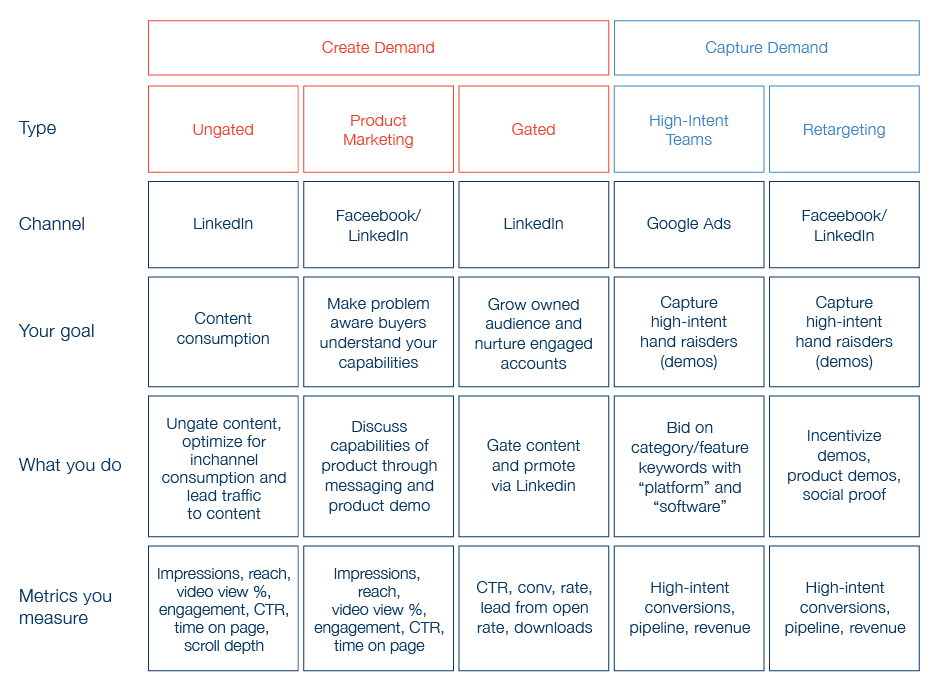
While inbound marketing primarily focuses on attracting prospects through organic channels, integrating paid advertising, such as Google Ads, can significantly amplify your results. Paid search management allows businesses to reach a highly targeted audience that is actively searching for products or services, increasing the likelihood of generating qualified leads and accelerating customer acquisition.
A strategic approach to Google Ads involves crafting compelling ad copy, selecting the right keywords, and optimizing bids to maximize return on investment. By continuously monitoring and refining campaigns, businesses can ensure their paid advertising budget is spent efficiently, driving relevant website traffic and supporting overall business growth.
Combining inbound marketing with paid search creates a powerful synergy. While content marketing and SEO build long-term authority and organic reach, paid media provides immediate visibility and the ability to test new messaging or offers quickly. A full service digital marketing agency can help you develop a comprehensive inbound marketing strategy that leverages both organic and paid channels, ensuring your marketing efforts are aligned and mutually reinforcing.
By integrating Google Ads and other paid media into your inbound marketing strategy, you can expand your reach, attract more qualified leads, and accelerate the impact of your digital marketing investments. This holistic approach ensures your brand remains visible at every stage of the customer journey, from initial awareness to final conversion.
Takeaways on Inbound Marketing Companies
In conclusion, partnering with a top inbound focused marketing agency can significantly boost your brand presence, lead generation, and overall business growth.
By evaluating an agency’s track record, identifying their specializations inbound and outbound marketing services, and assessing their communication and reporting capabilities, you can choose the right agency that aligns with your business goals.
By incorporating the key components of inbound marketing strategies, such as content marketing, SEO, social media marketing, and email marketing, your business can thrive in today’s competitive digital landscape.
Remember, the right inbound marketing agency can make all the difference in your business’s success. So choose wisely and let your best inbound marketing agency journey begin!
Frequently Inbound Agency Questions
1. What is an inbound marketing agency?
An inbound marketing agency is an experienced team of experts that does an inbound marketing strategy and methodology and helps businesses develop and implement effective inbound campaigns.
They provide comprehensive services to improve the customer experience, have their sales teams and marketing teams increase visibility, and generate leads through advanced strategies based on data and insights.
2. How do I choose an inbound marketing agency?
Choosing an inbound marketing agency should be a well-thought out decision. Do your research, talk to their past and current clients, read through case studies, and compare prices before you commit to hiring one.
With the right information, you can confidently pick the agency that is best suited for your business goals.
3. How successful is inbound marketing?
Inbound content marketing is an incredibly successful strategy for businesses, with video content inbound marketing campaigns also proving to be particularly impactful.
-
87% of marketers have seen increased website traffic from using videos inbound campaigns.
-
81% say they’ve seen increased sales.
-
88% of people are more likely to purchase a product or service after viewing a brand’s video marketing.
4. Does Apple use inbound marketing?
Yes, Apple does use some inbound marketing tactics as part of its paid advertising, and influencer marketing strategy. Their focus on the human element is evident in their commercials which often depict people coming together and connecting with one another.
5. Who are inbound marketers?
Inbound marketers are digital marketing professionals who use strategies and tactics from traditional marketing, such as content creation, search engine optimization, search and social services, search and social services, paid media management and email marketing automation to create high-quality content that engages and attracts customers.